A New Presidential Era Begins: Institutional Stability and an Unchanged Open Path
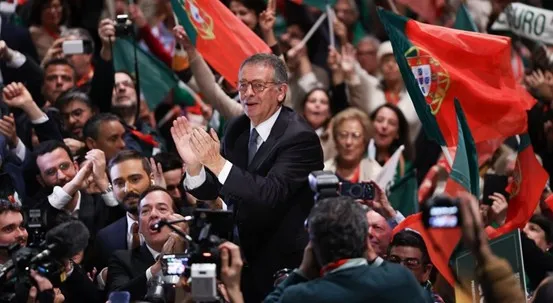
After securing a record-breaking 66.8% of the vote, António José Seguro has officially become Portugal’s new President of the Republic. This outcome represents more than just an electoral victory; it confirms a broader political direction. Despite the far-right achieving its highest vote share to date, Portuguese voters ultimately placed their confidence in a moderate socialist candidate.
Stability Over Political Confrontation
One of Seguro’s most widely quoted remarks on election night was: “I will not be an opposition force; I will make demands.”
This was not an emotional statement, but a clear institutional positioning. He emphasized that the presidency would not be used to generate political confrontation, but rather to safeguard governance efficiency and the proper functioning of institutions. He highlighted that the coming three years—without any nationwide elections—represent a rare period of stability, and that political parties and the government should seize this opportunity to address structural challenges such as housing, healthcare, youth opportunities, and economic development.
Under Portugal’s constitutional system, the president is not responsible for day-to-day executive decisions, but serves as a guarantor of institutional balance. In this context, the emphasis on “stability and cooperation” signals continuity rather than disruption.
The Socialist Party’s Approach to Immigration: Order, Governance, and Institutional Responsibility
The Socialist Party has long advocated for orderly immigration management rather than a closed-door approach.
During the campaign, Seguro did not propose radical measures to tighten immigration. On the contrary, in the context of post-storm reconstruction, he publicly supported the creation of a dedicated “labor entry channel” to address real workforce shortages. This position was not a temporary adjustment, but a continuation of his broader governance philosophy—placing immigration within the framework of economic structure and state functioning, rather than turning it into an emotionally charged political confrontation.
As he emphasized in his victory speech: “I will not stand with the opposition; I will make demands. The political stability I advocate is a means of ensuring the conditions for governance, not an end in itself to preserve the status quo.” This statement makes clear that, in his view, stability does not mean passivity, but ensuring that the state functions effectively within institutional boundaries.
When addressing the role of the presidency, he further stated: “I will not speak on everything, nor will I remain silent on everything. But when I speak, it will be to defend the public interest, safeguard national independence, and ensure the conditions for exercising our sovereignty.” This framing places governance, sovereignty, and institutional efficiency at the center, rather than reducing politics to single-issue mobilization.
Within this political framework, immigration is not treated as an ideological label, but as a practical issue linked to the labor market, social integration, and national competitiveness. In recent years, adjustments to Portugal’s immigration system have focused more on procedural management, administrative efficiency, and regulatory clarity than on excluding lawful investors or long-term residents.
When he added that “fear paralyzes, but hope builds,” the tone reflected a governing philosophy rather than a campaign slogan. The underlying message is that, in an uncertain international environment, Portugal chooses to respond to challenges through institutions—not emotion.
Capital Structure Upgrading and Institutional Execution
In recent years, Portugal has completed a significant structural adjustment, gradually shifting away from a heavy reliance on real estate-driven capital toward sectors with deeper industrial foundations. Investment flows have increasingly concentrated on venture capital and private equity funds, technology and innovation-driven enterprises, as well as financing mechanisms for domestic companies and capital market development.
This shift means that the role of external capital is changing—it no longer primarily drives asset prices, but is becoming more deeply embedded in corporate growth, technological advancement, and industrial upgrading.
In this context, the new president’s institutional positioning becomes particularly significant. He clearly stated that “in Belém, the national interest comes first,” and emphasized that transparency and ethical standards are “non-negotiable.” This stance is not merely political rhetoric; it provides institutional assurance for economic restructuring. As capital penetrates more deeply into productive sectors, the demand for regulatory stability and governance quality correspondingly increases.
Reflecting on the intense political cycle of three elections and four rounds of voting within nine months, he noted that a new three-year period without national elections has now begun. “There are no excuses,” he stressed, arguing that Parliament and the government now have a rare window of opportunity to address structural challenges in healthcare, housing, youth opportunity, gender inequality, poverty reduction, wealth creation, and overall living standards.
These remarks are not abstract promises but direct calls for governance effectiveness. He pledged: “I will remain vigilant. I will ask sharp questions and demand the answers the country needs.” At the same time, he underscored that the presidency would not obstruct legislative functioning, but ensure that institutions operate smoothly and that responsibilities are fulfilled.
Taken together, the convergence of economic restructuring and a stable political cycle does not signal a contraction of capital policy, but rather a more mature phase of adjustment: maintaining openness while prioritizing structural optimization, institutional transparency, and long-term competitiveness.
From the perspective of institutional functioning, economic direction, and political discourse, Portugal continues to demonstrate a relatively predictable policy continuity. This continuity—reinforced by an emphasis on execution and public accountability—forms the deeper foundation of the country’s stable development.
Reference link: https://www.rtp.pt/noticias/politica/nao-serei-oposicao-serei-exigencia-seguro-e-o-presidente-eleito-e-o-mais-votado-de-sempre_n1717436
For more details, please refer to: https://adlinvestment.com/en/about/